
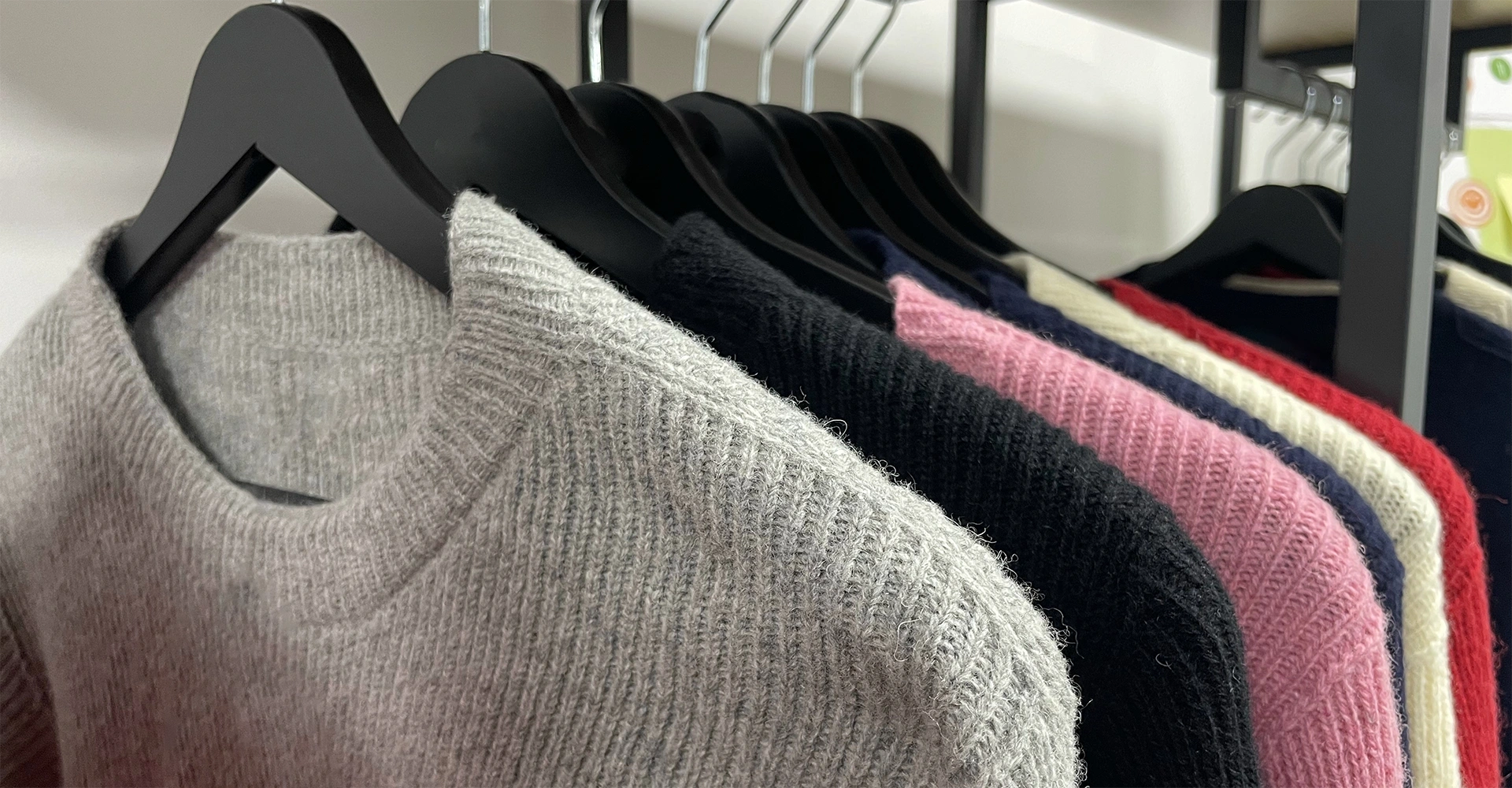
At the PELOT workshop in Vire, Normandy (14500), a sweater begins with yarn: whole-garment knitting, followed by finishing. Here are the stages involved in making a wool sweater, from fibre to garment.
From fibre to yarn: creating the material
Producing natural, synthetic or recycled fibres
It all begins with the raw material. Wool, obtained by shearing sheep, remains the undisputed star. Fibre fineness varies depending on the breed: merino, for example, is renowned for its exceptional softness.
There are also plant fibres such as linen, hemp and cotton, which are ideal for lighter sweaters. France is, in fact, the world’s leading producer of flax, a real asset for the local textile industry.
Dyeing: bringing colour to life
Before being spun, fibres are often dyed. Natural or chemical pigments are set in a hot bath. In France, this stage is governed by strict environmental standards, ensuring a reduced impact on the planet.
Carding and spinning: turning fibre into yarn
The fibres are then combed or carded to align them before being drawn and twisted to produce a strong, even yarn. This spinning process requires genuine expertise, which is now rare in Europe. Each yarn already tells part of the story of the sweater to come.
From yarn to sweater: knitting expertise
Yarn preparation: twisting, covering and sizing
Before knitting, yarns may be twisted together (several strands twisted into one) for greater strength, or wrapped around a core yarn for greater elasticity. These small steps make all the difference to how well the knitwear holds its shape and how long it lasts.
Whole-garment knitting: a textile revolution
Whole-garment knitting makes it possible to create a complete sweater in a single piece, without any seams. The result: less waste, greater comfort and enhanced durability. This technique is attracting a growing number of brands seeking to combine innovation with environmental responsibility.
Whole-garment knitting is a manufacturing technique in which the garment is knitted by machine as a single piece, without cutting or assembling sewn panels. It reduces material offcuts and helps the garment retain its shape over time. PELOT uses this technique in Vire, Normandy (14500), for the Marceau, Alma, Nino and Romy sweaters, the made-to-measure sweater, and the Robin and Origine hats. Billie socks are knitted on a flat-bed knitting machine.
Finishing: when the sweater takes shape
The knitted panels are steamed to stabilise their shape. Once the sweater has been shaped, it undergoes a gentle industrial wash to remove residues and soften the fibre.
Each piece is then meticulously inspected, pressed and carefully folded before leaving the workshop for your wardrobe.
Support French textile manufacturing
Explore the PELOT collection of sweaters made in Vire, Normandy (14500).