
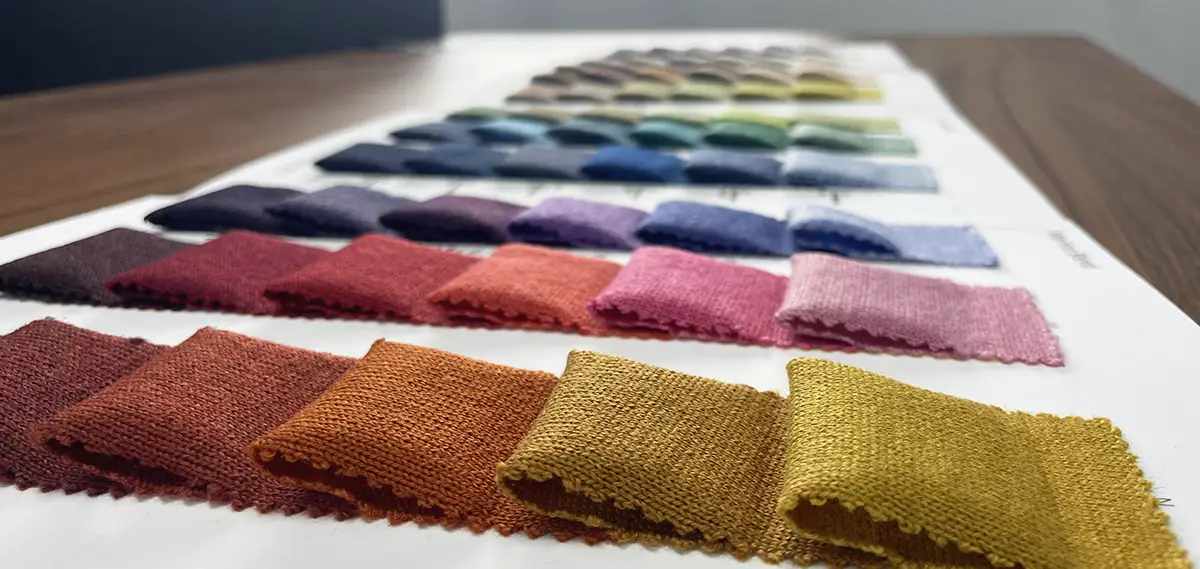
The world of knitting is evolving at an impressive pace. Combining traditional expertise with technological innovation, knitwear manufacturers are rethinking their methods to produce better, faster and, above all, more sustainably.
Today, there are three main ways to make a knitted garment: cut-and-sew knitwear, panel knitting and whole-garment knitting. Each has its advantages, limitations and environmental impact.
1. Cut-and-sew knitwear: speed and productivity
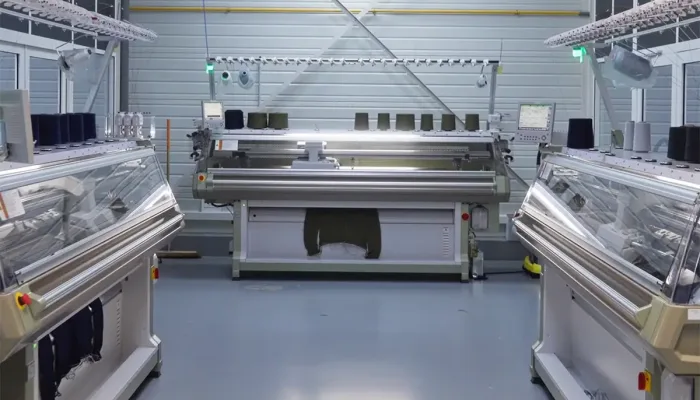
This is the most industrial and widespread method. Large rolls of knitted fabric are produced, often on circular knitting machines, before the various garment pieces are cut out using a pattern. These pieces are then sewn together to create the finished product.
This technique is extremely efficient: it can produce several square metres of knitted fabric per minute. But it has a drawback. Some of the material is lost during cutting. Depending on the complexity of the pattern, cutting waste can account for 30% of the material used, or even more.
2. Panel knitting: precision and expertise
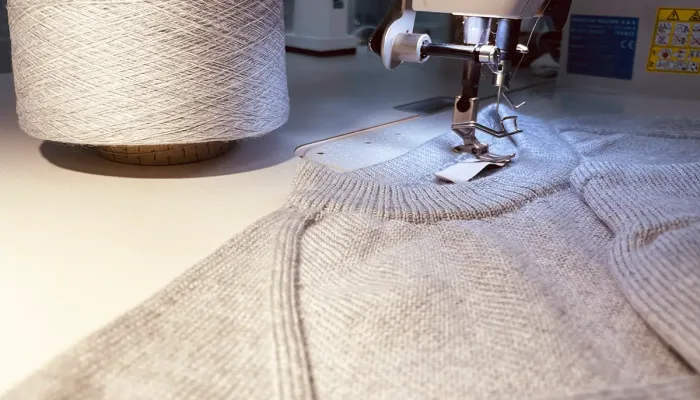
Here, each part of the garment (front, back, sleeves, etc.) is knitted separately on a flat-bed knitting machine, directly to the correct shape. This is often referred to as fully fashioned knitting.
The panels are then steam-treated to stabilise the knitted fabric before being assembled by sewing or linking. This method limits material waste (to around 10%), but seams are still present.
3. Whole-garment knitting: the quiet revolution
The latest textile technology, whole-garment knitting makes it possible to produce a garment in a single piece, without any seams.
Using computer-controlled flat-bed knitting machines, each needle operates independently to knit the front, back, sleeves and even the collar simultaneously. The garment comes off the machine fully formed, ready to be washed and labelled.
- Virtually no material waste: just 1 to 3%, compared with 30% in the conventional industry.
- No seams: unrivalled comfort, without chafing or added bulk.
- Energy savings: a single steam-treatment stage for the finished product.
Combined with thoughtful eco-design and local production in Vire, Normandy (14500), whole-garment knitting reduces the environmental impact of a sweater compared with cut-and-sew construction. PELOT uses it for its sweaters and hats; Billie socks are knitted on a flat-bed knitting machine. The process is described in detail on the PELOT French manufacturing page.
Experience whole-garment knitting
Order your sweater, made especially for you in our workshop.